Showing posts sorted by relevance for query sirk. Sort by date Show all posts

Thursday, April 1, 2021

Miracle Month: The First Legion


The First Legion
(1951)


Atheists don't seem to be villains in movies these days, at least in big studio films. Sure, some Christian films, such as the God’s Not Dead series have bad guy atheists who are just shy of Snidley Whiplash (though they generally don't twist their mustaches while tying the heroine to the railroad track).

But in mainstream films, Charles Darwin and Stephen Hawking are heroes. Even fictional characters such as Jodie Foster’s scientist in Contact and Nick Angel in Hot Fuzz are heroes -- and often the most rational, compassionate people in their fictional worlds. Ricky Gervais' 2009 film, The Invention of Lying, is a full-throated advocation of atheism. TV features even more fictional atheists as heroes: Greg House (House), Temperance “Bones” Brennen (Bones), and Mal Reynolds (Firefly). Atheists are often portrayed as the only people who see things clearly and are free of hypocrisy. 

This is not the atheist physician in Douglas Sirk’s 1951 film, The First Legion.


Douglas Sirk had a unique career in Hollywood. In 1937 he fled his German homeland with his Jewish wife to begin a career in Hollywood. His commercial hits of the 1950s (Imitation of Life, All That Heaven Allows, Written on the Wind, Magnificent Obsession) were dismissed by critics of the time as “women’s weepies” and sentimental melodrama. Today his films are highly regarded by critics and filmmakers for technique, use of Technicolor, and Sirk's compassionate treatment of society’s outsiders. His focus on domestic situations and the problems of women is now celebrated rather than dismissed as unworthy content.

The First Legion was made before those well-regarded classics and very different in form and content. First of all, it was filmed in black and white, and rather than being set in a suburban home, it is set in a Jesuit seminary. (A title card at the beginning of the film gives a history lesson, “Four centuries ago St. Ignatius of Loyola, a former soldier founded a company of priests called the Society of Jesus, the Jesuits. This a group of them in the modern world.”)


We meet Father John Fuller (Wesley Addy), a priest considering quitting the ministry. He says, “I’d like to go home. I’d like to be part of a real family again. It’s pretty lonely being a man of God all the time.” He prepares to leave the seminary, but the night before his departure, Friar Jose Sierra (H.B. Warner), who has been bedridden for years, rises from his bed and walks to Fuller’s room and tells him he had a vision which told him that Fuller must not leave the order.

Friar Sierra's healing is considered a miracle by most at the seminary. Headlines across the country proclaim the healing. The Rector of the seminary, Father Paul Duquesne (Leo G. Carroll), is excited by the attention the “miracle” is attracting not just to the seminary, but also to the patron saint of the seminary, Joseph. Crowds surround the seminary, and concession stands spring up (including one selling St. Joseph dolls for a dollar.)

But one priest, Father Marc Arnoux (Charles Boyer) does not share the excitement. He is concerned about those who are making a trek to the seminary seeking healing, fearing the travel will harm people’s health and finances. Arnoux, a former lawyer, is dubious about the healing. He investigates, interrogating Sierra’s physician, Dr. Peter Morrell (Lyle Bettger). The doctor asks Father Arnoux if he can make a confession, and confesses that he gave Friar Sierra a drug that brought about the healing. 


As an atheist, he found it amusing to see the believers celebrating a “miracle” of God when he knew that it was no such thing. Arnoux urges Morrell to publicly disavow the “miracle,” but he refuses and reminds the priest that making the confession public would break his vow of silence. The doctor even burns his records of the Sierra case. He considers it all a fine joke.

The doctor only comes to question his decision when one of his patients, Terry Gilmartin (Barbara Rush), beautiful but wheelchair-bound, seeks healing from Saint Joseph. She wants to go on the seminary grounds, which is forbidden. (Forbidding the public from being on the seminary grounds, particularly the seminary chapel, is a rule I found quite strange.) The doctor confesses what he did to Terry, looking to quash her false hope.

But Terry still believes. She finds a way to the seminary chapel and there prays for the soul of Dr. Morrell. She then finds she can rise from her chair and walk. A true miracle.

Most of the priests of the seminary are good men (there is one priest who is a self-righteous ass, but he’s an exception.) There is also a non-Jesuit priest, Monsignor Michael Carey (William Demarest), who enjoys  teasing “God’s Marines” but seems to be a good man. He delights in dogs and says at one point, “Today I saw a man die and a baby born. It was a good day. Everyone should see a baby born.”


So the priests of this film earn our highest Movie Church Rating of Four Steeples and Dr. Morrell should be glad we aren’t rating atheists.

Thursday, December 30, 2021

2021 Movie Churches in review


Movie Churches Wraps Up 2021

It feels like I always have to explain the Movie Churches rating system. People see a low rating for a church (or clergy member) and assume I didn’t like the movie or, vice versa, think I like a film because it got a high steeple rating.

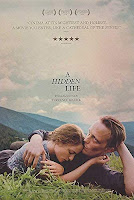
For example, one of my favorite films this year, A Hidden Life, featured a man of great faith, but he was not a member of the clergy. The clergy and church in that film were corrupted by the Third Reich, so though the film was wonderfully made and featured people boldly imitating Christ, it received a lowly Two Steeple rating.

On the other hand, this year I watched the “Christmas Classic” Love Actually for the first time. Apologies to those who love this film, but I rather loathed it. So many people in the film made stupid, selfish choices that the film seemed to celebrate. The few fleeting glimpses of church and clergy were relatively innocuous, arguably positive, so the church and clergy in the film received a respectable Three Steeple rating.

With all this in mind, I decided to feature the films that received Four Steeple ratings this year -- which doesn’t mean, of course, that I loved the film or even that it's worth seeking out. But in a world where the popular media often presents the church and pastors negatively, it is worth pointing out that it isn’t always the case. Fourteen films received that coveted Four Steeple rating.


January began with a celebration of British film. 1947’s Odd Man Out, directed by master filmmaker Carol Reed (The Third Man). This film is worth pursuing, and the priest in it is a marvelous man who makes a difference in the lives of many, including thugs and gangsters.

We often celebrate Black History Month at Movie Churches, and the best clergy and church this year were found in a film added to the U.S. National Film Registry in 1991. The Blood of Jesus (1941) is an interesting film that uses alternate realities several years before It’s a Wonderful Life. It's a strange film, but the church and clergy in the film are very supportive of a hurting woman.

Okay, I admit I’m not a big fan of legendary director Douglas Sirk. I find his work too sentimental for my tastes, but I can’t fault the men in the Jesuit seminary in 1951’s The First Legion. During the month of April, Movie Churches looked at miracles in movies, and the first miracle in The First Legion is a kind of April Fool’s prank. The second is not.


If I offended any cinephiles by dissing Douglas Sirk, maybe I can get back in their good graces by praising the director of 1937’s You Only Live Once, Fritz Lang. No one could set up a creepy, foreboding atmosphere like Lang. May was Criminals month, and poor Henry Fonda led a life of sinister foreboding. His few bright spots in life came from his love interest, Sylvia Sidney, and his prison priest. Father Dolan is a source of unquestioning, unconditional love. As they say in the film, “Father Dolan is for everyone!” so we’re all for him.

During Criminals month, we also had a positive presentation of a nun in a film about Postal Inspectors. Really, apart 1951’s  Appointment with Danger, have you ever seen a film about postal inspectors?

Not surprisingly, June (Missionaries month) was a good time for High Steeple ratings. Though a good guy, Humphrey Bogart wasn’t a real priest or missionary in China in 1955’s The Left Hand of God, but he did encounter real missionaries worthy of a Four Steeple rating. Though 2016’s On Wings of Eagles is not nearly the film Chariots of Fire was, it gives an accurate enough presentation of Olympian/Missionary Eric Liddell who is as worthy of Four Steeples as he was of Olympic gold.


Christian film month, in July, presented other real people worthy of Four Steeples. Joni Eareckson even played herself in 1979’s Joni. I have very great respect for this paralytic woman who allowed God to use her injuries as a source of strength, building ministries to hurting people throughout the world. Though Pat Boone’s performance as real-life urban pastor David Wilkerson (in 1970’s The Cross and The Switchblade) isn’t what you could call, um, good, we do get the glimpse of a very good man who founded a very worthy ministry, Teen Challenge.

In August we looked at Hollywood Biblical spectacles about the start of the church: The Sign of the Cross, Quo Vadis, and The Robe. I didn’t really enjoy any of those films very much, but if you think I’m going to give Peter and Paul and the other apostles anything less than Four Steeples, you’ve got another think coming.


Looking at Christian schools in September, I was happy to watch a film I really love that also happens to have a positive presentation of clergy: 1993’s Rudy. It is often listed among the films that can make a man cry. Not me, of course. I was, um, just chopping onions.

Our last Four Steeple films were found in November with a triple feature of films about the founder of the Protestant Reformation, Martin Luther. Though he had his faults as a man of his time, and all people have, he still earned his Four Steeples in 1953’s Martin Luther, 1974’s Luther, and 2003’s Luther.

So this is the last Movie Churches post of 2021. Next week we'll start a month of Comedy Churches to kick off 2022.

Thursday, August 4, 2022

War month begins with a Battle Hymn


Battle Hymn
(1957)


Prayer is pretty basic to the Christian life, and not just life among the clergy. The Apostle Paul wrote that we should “pray without ceasing." When He gave His disciples The Lord's Prayer, Jesus provided a prayer believers recite from memory as well as a blueprint for new prayers. 

In its most basic form, prayer is just talking to God. It's not surprising that even atheists have thrown up plenty of “God, I don’t really think you’re there, but if you are…” from foxholes.

So it’s rather baffling why, in the film Battle Hymn, the Rev. Lt. Col. Dean E. Hess (Rock Hudson) is so hesitant to pray, even in a wartime setting. (The film has scenes both in World War II and the Korean War, which is fortunate as this is War Month here at Movie Churches.) The film was based on Hess’s autobiography (also entitled Battle Hymn), and is directed by Douglas Sirk (the acclaimed director who fled Nazi Germany with his Jewish wife).


After an introduction from General Earle E. Partridge, a four-star United States Air Force general who expresses his admiration for Hess and declares the film to be “an affirmation of the eternal goodness of the human spirit,” the story begins with Hess (Rock Hudson) as a World War II bomber pilot over Germany. A malfunction causes a delay in dropping one of his bombs, causing it to land on an orphanage, killing 37 children.

He is wracked with guilt. The film makes it appear that he enters the ministry to assuage his guilt, but Hess had been ordained in the Disciples of Christ Church prior to the war. We see him preaching on a Sunday morning, “A broken and contrite heart the Lord will not despise.”

After the service, one of the church officers gives a mild critique of the sermon. Hess talks to his wife (Martha Hyer) and mourns, “He’s right, Mary. All I seem to be able to do is repeat words from a book.” 

Considering that the book he is talking about is considered the very word of God in his denomination, perhaps he shouldn’t have such a lowly opinion of that work. He seems to be in ministry only to deal with his guilt, but he says, “I’ve tried for two years. When I became a minister, I thought I would find a way to live with it, but I haven’t.” Anyway, he decides to rejoin the military when the Korean Conflict begins. He tells Mary he is enlisting again to fly and fight (“One doesn’t always have to have a clear reason for the things he does, he just feels it.”)

Hess is assigned to train South Korean pilots. One of the American men serving under him is Captain Dan Skidmore (Dan DeFore), a friend he served with in WWII. Dan remembers Hess by his nickname, “Killer”, and has no knowledge of Hess’s work as a pastor. (Skidmore is unpleasantly surprised when he sees a letter addressed to Rev. Hess --from the same church leader we saw earlier). Why would Hess keep his ministry history secret from the other soldiers? 


We learn why when his men discover he's a minister.  They practically revolt, worried that a minister won’t be ruthless enough to lead them in battle. This seems rather absurd. The soldiers have surely seen many military chaplains whose training was the same as theirs, who faced the same dangers in battle they would face. Eventually, they come around to trusting Hess again.

The problem, though, isn't just that Hess hides his calling from the men. He seems to want to hide his faith completely from his men. At their Thanksgiving meal in the field, one of the soldiers stands up and says, “On the farm, my pa always said grace at Thanksgiving. Not that we were particularly religious. Is there someone more qualified to pray?”

The ordained minister stays seated and allows the farmer’s son to pray awkwardly. Later, when that man learns of his superior’s other profession, he’s steamed. “You mean Thanksgiving you just let me fumble around?” 

Hess tells him, “You did fine, Frank. People who volunteer usually do.”


There is another more serious instance in the film where Hess avoids praying aloud. With his friend, Skidmore, they fly into battle against the North Koreans. Skidmore’s plane is hit, and Skidmore is hit as well. He manages to land his plane and Hess pulls him from the cockpit.

Skidmore says to Hess, “Could you pray for me?” 

Hess responds, “I already did.” 

This is a jerk move. If someone is in pain and dying, one doesn’t just say one prayer and be done with it. If someone believes in God, in prayer, they will not just pray once and be done with it. And Skidmore asked for prayer. Many people, even those who don’t consider themselves religious, will find some comfort in hearing a prayer, or perhaps a recitation of the 23rd Psalm. Hess denies his friend this comfort but provides some words of encouragement.

You may be wondering, at this point, why they even bothered making a film about Hess. Well, he was part of two rather worthwhile projects. He helped found an orphanage for Korean children and when that orphanage was threatened by the North Koreans, he helped evacuate the orphanage. These were wonderful acts, but he confesses to a wise old Korean man that while working with the children, “I couldn’t find anything to say, even a prayer.” 

The old man assures him that his acts of kindness are a true presentation of the Gospel. There is truth to that, but many other important participants in these projects weren’t necessarily people of faith. So his work for the orphans was good work, but was it really the work of a clergyman? And after the publication of his autobiography, there were some who accused Hess of taking more credit for “Project Kiddie Car Airlift” than he deserved.

Hess seems to have been a good man, but as a clergyman, the best we can manage to give him for a Movie Churches rating is Two Steeples.