Showing posts with label Liam Neeson. Show all posts

Thursday, December 22, 2022

Best Movie Churches Films


To be honest, most films don’t exactly have good life lessons. 

I love Liam Neeson action films, and while Taken does teach the important lesson that Father Knows Best (and as much as we in the audience cheer on his sadistic trail of revenge to save his daughter), we know that going out on our own to kill bunches of people would not lead to good places. We may delight in James Bond’s bon mots as he hops from one bed to another, but in real life, emotional and spiritual havoc is brought on by such behavior (leaving aside pregnancy and STDs).

I am a Christian and a pastor who also happens to love films. I recognize that most films, even ones that I enjoy, don’t present a healthy approach to decision-making or relationships. I’m with Paul who (in Romans 12:19) advised against taking revenge because that's God’s territory. Yet I still want to see Wayne or Eastwood shoot up the town. I agree with the writer of Hebrews in the 4th verse of the 13th chapter that the marriage bed should be kept holy, but part of me really wants Rick to fly off with Ilsa.

But every once in a while, the filmmakers get some things right and show characters making choices that would be wise choices in real life. The following films are sources of spiritual encouragement for me, and maybe they will be for you, too. 

12) Silence (2016) 
The first couple of films on this list aren’t the kind of films you’ll find on PureFlix, the Christian streaming channel. Martin Scorsese adapted this grim film about the persecution of the church in Japan from the novel by Shusaku Endo. It’s not a film about Christians boldly holding up to persecution; it’s a film about Christians giving in to severe persecution. It teaches that life can be hard, we can mess up, but God is still there and still faithful.


11) Wise Blood (1979)
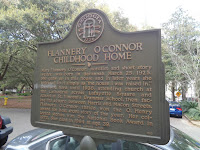
John Huston adapted Flannery O’Connor’s tale of a man who tried to create a "Church without Christ," but instead finds he can’t escape Christ. These are two films in a row of people not being faithful where God is faithful. Both films encouraged me greatly.

10) Millions (2004) 
In Luke 16 you can read the parable of the Shrewd Manager about a man who used resources he was entrusted with for his own benefit. The point of the story is that we should use our resources for the benefit of others and eternity. This story is told in another way in this film. (I do have a problem with St. Peter's recollections in this film, but otherwise…) Bonus -- it's a Christmas film!

9) The Case for Christ (2017)
This is the only “Christian” film on the list. Most films made by Christian filmmakers are… what's the word? Oh yeah. Bad. This true story of Chicago Tribune reporter Lee Strobel’s investigation into the truth of the Christian faith works. For three Christmases, I’ve shown this film to men in a recovery program at my mission, and every time they've found it to be moving in a positive way. 

8)
Ordet (1955) 
The great Scandinavian director, Carl Theodore Dreyer, told this story of a family and a town, divided by petty denominational differences, brought together by a man who seems mad -- and a miracle.

7) Chariots of Fire (1981) 
“I believe God made me for a purpose, but he also made me fast. And when I run I feel His pleasure.” So says Eric Liddell in this Oscar-winning story of an Olympian who didn’t put his sport first. Liddell was a man who recognized what was truly important in life but found joy in secondary things as well.

6) Joyeux Noel (2005)
This is the second Christmas film on the list. Set in World War I, it tells the story of peace on Christmas Eve. If it could happen that one night, why not more?

5) Babette’s Feast (1987)
This Oscar winner for Best Foreign Language shows the joy to be found in sharing your gifts with others.

4) A Hidden Life (2019)
Terrence Malick isn’t known for making edge-of-your-seat blockbusters. This isn’t an exception to the rule. It's a meditative telling of a lone man's opposition to the power of the Third Reich.


3) The Apostle (1997)
Robert Duvall has starred in three of the best films about Christianity ever made. (If this was a top twenty list, I would have also included Get Low.) Duvall wrote and directed this film, as well as starring as the Apostle, E.F. There have been many films about flawed clergymen, but this film does an amazing balancing act of presenting a preacher’s mistakes and sins with the glory and value of the Gospel.

2) Leon Morin, Priest (1961)
Over this blog's seven years, I’ve seen many pastors on the silver screen. Some were crooks and murderers, but more often they were sappy and insipid. This French film presents an intelligent, funny, and wise man who is also faithful to God and his ministry.

1)Tender Mercies (1983) 
This is my favorite film about faith. An alcoholic country-western singer passes out in a small, rural motel. The motel's owner cares for Mac Sledge (Robert Duvall) as he comes to recovery and new life. He still has pain and regrets. I work with men overcoming addictions to alcohol and drugs, and this film rings true. Mac’s walk of faith rings true. And do you know what else? The pastor and church in this film deserved the Four Steeple Rating.

Next week, we'll wrap up the blog and 2022.

Thursday, December 16, 2021

It's Christmas (but what does that really mean?)


Love Actually
(2003)


Movie Churches has a fundamental disagreement with this film about Christmas practices. Love Actually, an anthology of romantic tales with Yuletide themes is based on the idea that Christmas is the time of year when people must tell their deepest love (or at least their current infatuation) to that special someone. A young boy must tell a classmate he likes her before she leaves for America, the Prime Minister of England must tell a young member of his staff he likes her, a man must tell the recently wed bride of his best friend he loves her…

This is all very confusing to us at Movie Churches. We thought the holiday where one honestly shared feelings of affection was Valentine’s Day, or perhaps New Year’s Eve in a pinch. Christmas is the time to HIDE how we feel. Even if we find Uncle Eustace’s politics abhorrent, we gloss over it at Christmas dinner. We pretend the hideous sweater from Mom is just what we always wanted (and we even wear it, if only for the day). Someone will even say, “I just adore fruit cake!” 

And this "absolute honesty at Christmas policy" seems to have its limits. Early in the film, a rather delightful scene takes place at the church when Peter (Chiwetel Ejiofor) and Juliet (Keira Knightley) are getting married. After the minister declares, “In the presence of God, Peter and Juliet have given their consent and made their marriage vows to each other. They have declared their marriage by the giving and receiving of rings. I, therefore, proclaim that they are husband and wife,” Mark (Andrew Lincoln), the best man and Peter's best friend, enlivens the event.


He's arranged for a flash mob to play the Beatles' “All You Need is Love.” There's a choir in the balcony, with the lead singer, horns, and a string section in the congregation. Everyone, including the minister, is delighted, as are the bride and groom. No one seems happier than Mark who arranged it all. Good for the church for allowing, perhaps encouraging, such a happening.

We learn that Juliet, Peter’s wife, assumes that Mark hates her. He's been rather cold to her and avoided her. But since Christmas is that magical time when everyone must be honest about their romantic feelings,  Mark must share his infatuation with Juliet. He does so with another dramatic show, proclaiming his love for Juliet with cue cards at her door (Prime Minister Boris Johnson mimicked in a famous campaign ad). In order to pull off this great display of “honesty,” both Juliet and Mark must deceive husband/best friend Peter. (The strains of “Silent Night” accompany Peter’s friend and wife kissing.) This perhaps bodes bad things for all their relationships in the future.


The film also presents another important life event in a church, a funeral. Daniel (Liam Neeson) gives the eulogy for his late wife, Joanna. The speech is full of wit and humor as he talks about how his late beloved expected he would bring Claudia Schiffer to the funeral. He says there were also “other things [in the funeral service] she was pretty damn clear… I said over my dead body, and she said, ‘No, Daniel, over mine.’” Then, as Joanna wished, the sound system blares with the Bay City Rollers song “Bye, Bye Baby.”

As the service ends and the coffin is carried out of the church, we see a woman (who I assume was the officiating clergy). I’m less than impressed with her -- it's rarely wise to entrust the conclusion of a funeral to the bereaved spouse. Few are able to restrain their understandable emotions. And though the Beatles might certainly provide a suitable finale to a wedding, the Bay City Rollers can’t provide a suitable conclusion to… um...anything I can think of.


I found it quite interesting that these are the only two occasions people go to churches in this film, even though the film’s climax is on Christmas Eve. For some reason, everyone goes to an elementary school's nativity play on Christmas Eve. I’ve never been to Great Britain, but I've seen numerous film and stage productions of A Christmas Carol. And I haven't seen a single one where I saw the Cratchitts gather for Tiny Tim’s school play.

Love Actually’s nativity play is a little bizarre, with an octopus and a lobster gathering at the manger with shepherds and angels while “Catch a Falling Star” plays. And then the show concludes with that time-honored carol, “All I Want for Christmas is You.” What would have happened if a student told their teacher, ``I can't do the play because our family always goes to our church’s Christmas Eve Service” or “We always have Christmas Eve dinner at Aunt Bertha’s” or “I’m Jewish.?”

There are no Christmas Eve Church Services for our Movie Churches Steeple Rating, but for the wedding church and the funeral church we, in the spirit of Yuletide generosity, grant them a three steeple rating.

Thursday, September 24, 2015

Grace Unplugged (2013)

Every father can agree that one of the greatest movies of this century is Liam Neeson's "Taken" because it teaches the important lesson that Dad was right all along. I'm not saying "Grace Unbroken" is in that class of cinema as it doesn't have shootings, electrocutions, or car chases but it still has that important theme. The reason I'm writing about it here is the film has a church, while, sadly, "Taken" does not.

"Grace Unplugged" tells the story of a one-hit-wonder rock star, Johnny Trey, (think Barry McGuire) who hit the skids and is now the worship leader in a small church. His daughter, Grace, plays with him on the church's worship team, but they fight and she leaves home for Hollywood to become a rock star. It's sort of like the Miley Cyrus story with a happier ending.

Early in the film we see father and daughter together in a church worship service performing the song, "Never Let Go". Though there are other singers and musicians, the two are standing up front -- both thinking they're the primary worship leader. The minor clash in styles is obviously not a small thing for them. After the service we see a friend of Grace's full of compliments which Grace swats away with disgust.

At home, we see father and daughter argue about the worship service. Johnny wanted Grace to play the piano, as she had in rehearsal, but she played the guitar.

He also wasn't pleased with her singing style, which leads to the memorable quote, "The rest of us are doing Chris Tomlin and you act like it's a Renae Taylor concert!" You probably don't know who Renae Taylor is, because she's a fictional rock star character in the film. She things like this: "In this business, your body is your main source of capital and sometimes you have to spend it." You might not know who Chris Tomlin is, but he is a real Christian musician.

And you know one thing for certain when you hear his name mentioned: he will make a cameo appearance in the film. Yes, it happens.

What I loved about this was it does capture something that I have seen happen far too often -- squabbling on the worship team. Yeah, usually it's brothers and sisters in Christ squabbling rather than a father and daughter, but it still is something that happens. A lot. Which always gets explained as "You know how those creative types are."

Something that baffled me in the film was the size of the church. All the pews seem full in the worship service we see, but even the most generous ushers' count would place it at about 120 people. Yet the church somehow seems to be able to afford a full time teaching pastor AND a full time worship pastor, Johnny Trey. The only possible explanation is he is living off the royalties of his hit, "Misunderstood," and at the church he's working for all the coffee he can drink.

We never see the pastor, Pastor Tim, preach, but we do see him socialize with the Trey family and providing counsel to Johnny. When the Trey family fights, Tim and his wife also bicker, and he chuckles sympathetically. When Grace runs away, Pastor Tim does offer sound advice. He says that Grace might not listen to Johnny's advice anymore, but he can trust her in God's hand.
In the end, Grace sees the moral depravity of Hollywood and returns home. Obviously, the church is what brings Grace back, with Pastor Tim mediating her return.  So we're giving the church (and Pastor Tim) 3 steeples.


(And though we usually don't review the film itself, I give the film two big thumbs up for the moment Grace says, "You were right, Dad."  I was touched.)