Showing posts with label woody allen. Show all posts

Friday, March 11, 2022

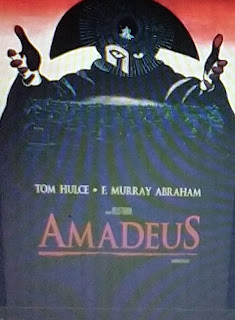
Oscar Month: Best Picture Winner - Amadeus


Amadeus
(1984)

Separating the art from the artist is an age-old problem.

It’s easier when the message of a work of art is as problematic as the person. When streaming Triumph of the Will or Olympia, you probably aren’t trying to figure out whether filmmaker Leni Riefenstahl was a good person or not, since the glorification of Adolf Hitler sort of speaks for itself. While viewing The Birth of a Nation, you probably aren’t perplexed about whether writer/director D. W. Griffith had racist tendencies when you see African Americans depicted as savage, unthinking animals. But knowing this about Griffith, do you want to watch his other work? Intolerance or Way Down East or Orphans of the Storm, all of which received a great deal of critical acclaim through the last century?

There are those who won’t watch the work of Roman Polanski (Chinatown, The Pianist) because of his conviction on the charge of sex with a minor. And others who won’t watch the work of Woody Allen because of accusations on the same charge.

Some will no longer watch an actor or actress because of the political stands they’ve taken. Because someone supported or attacked Donald Trump or Joe Biden, cancelation of that person’s career is the only viable option.

As I said, this is not a new problem.

The 1984 film Milos Forman's Amadeus (and the 1979 Peter Shaffer play it is based upon) puzzles about how to look at excellent, in fact, divine, music when it is the creation of a truly flawed man. The play and the film greatly fictionalize the life of Wolfgang “Wolfie” Amadeus Mozart (Tom Hulce) in order to pursue this perplexing philosophical question.

The story is told from the perspective of Antonio Salieri (F. Murray Abraham), an actual composer of Mozart’s day, and the anti-hero of the piece.

Fortunately for this blog, examining churches and clergy, the film opens with a priest coming to visit Salieri, a resident in a madhouse. The priest tells Salieri, “I can’t leave alone a soul in pain,” and tries to assure him by saying, ‘“All men are equal in God’s eyes, I can offer God’s forgiveness.”

Salieri asks the priest what he knows about music. The priest says he studied music as a child and urges Salieri, “My son, if you have something to confess, do it now.” Salieri agrees to tell his story -- but to tell his story, he must tell Mozart’s story.

While Salieri sang in church as a boy, Mozart, as a child, was playing before the Pope. 

Salieri’s father prayed his son would be a man of commerce. Salieri prayed for God to make him a great composer. He promised in return to live a life of chastity, industry, and humility. Salieri considered his father’s death a gift of God. Before a crucifix, Salieri prays his thanks.

Salieri does experience great success as a composer. His works are played in the Hapsburg Court and his operas are quite popular. But then he encounters Mozart.

In Salieri's opinion, Mozart is a young, uncouth slob -- but Salieri hears Mozart’s music and realizes it far surpasses his own. He is filled with jealousy for the talent of Mozart, which he considers to be clearly divinely given. Salieri says, “If God did not want me to praise him with music, why did he give me the desire but not the talent?”

Salieri feels God has cheated him because the gift of musical genius was given to Mozart rather than himself. He burns a crucifix. He decides to war against God by secretly warring against Mozart. He sabotages the young composer's career and life. “I finally saw a way I could triumph over God,” he tells the priest. That secret war comprises most of the film, culminating in Mozart’s death.

Salieri believes that he killed Mozart, and that's what he tells the priest.

The priest is befuddled and has nothing to say at the conclusion of the confession. Salieri seems bemused by the priest’s sense of inadequacy. He sees a bit of himself in the priest, and says, “I will speak for you, Father, I speak for all the mediocrities of the world. Mediocrities everywhere, I absolve you.”

So does a composer's character matter? Beethoven’s "Ode to Joy" from his 9th Symphony is sung by churches around the world as “Joyful, Joyful We Adore Thee,” but that composer was a rather bitter man who argued with others throughout his life. Does that matter?

James 1: 17 says, “Every good and perfect gift is from above, coming down from the Father of heavenly lights, who does not change like shifting shadows.” It is too bad Salieri didn’t take this Bible verse to heart and appreciate the music of Mozart as a gift of God. And we, perhaps, should do the same.
As for the Movie Churches rating for that little priest who came for Salieri’s confession? He did his best and for that, we’ll give him Three Steeples.


Monday, August 22, 2016

Vermont films on the small screen


A comedy with a searing and cynical take on the media as gossip mongers and money grubbers sounds like a current, cutting edge project. Or it’s a William Wellman directed, studio comedy from 1937, Nothing Sacred.  The film tells the story of a young woman, Hazel Flagg, who lives in the fictional town of Warsaw, Vermont. She’s misdiagnosed with terminal radiation poisoning. A struggling newspaperman, Wally Cook, takes Hazel to New York for a proto-Make-a-Wish adventure. But when it’s discovered that Hazel is just fine, saving face takes priority over the truth.


Carole Lombard and Fredric March star in the film, and their charm has endured through the decades. The film is still funny, but there are some unfortunate racial jokes that are now just sad. There are no churches in the film, but original sin as a theological issue is fully in evidence.


There are scenes in Vermont which were not actually filmed in Vermont. (Though the New York scenes were filmed in New York.) But I have to give the film props for a fun take on the reserved, taciturn nature of Vermonters and a bonus for a shoutout to Vermont native Calvin Coolidge.
Another (more optimistic) comedy about a Vermont yokel who goes to the big city is 1936’s Mr. Deeds Goes to Town. Frank Capra’s classic stars Gary Cooper and Jean Arthur in a story about a simple man who inherits a fortune. Like Nothing Sacred, this film also has scenes in Vermont and New York, but the entire film was produced on the Columbia Studio lot.


Harold Ramis (not author)
The contrast between the simple country life in Vermont and the vulgar life in the big city is a comedy trope that endured through the decades but a switch comes in the 1980’s when, instead of having the hayseed from Vermont go to the big city, an urbanite becomes a fish out of water in rural Vermont. 1987’s Baby Boom starred Diane Keaton as a Manhattan career woman who inherits a baby from a distant relative and must move to the country. The film also stars Harold Ramis, a deceased actor people increasingly refer to as my doppelganger. This movie was actually filmed on location in Vermont and New York.


1988’s Funny Farm is an unacknowledged remake of the TV show Green Acres in which a prosperous New York couple (Chevy Chase and Madolyn Smith Osborne) who decide to become farmers in the Vermont countryside. They encounter eccentric locals and customs, and the film was directed by George Roy Hill on location in Vermont and New York City.


Alfred HItchcock set one of his rare comedies in Vermont, 1955’s The Trouble with Harry. It’s a film about a corpse that plays hide and seek in Vermont’s lovely autumn foliage. The film features Shirley MacLaine in her first starring role and also features television’s Jerry Mathers (Leave It To Beaver). Most of the film was made on location in Vermont.


There are dramas set in Vermont as well. The 1939 Bette Davis tearjerker about a young socialite with a brain tumor, Dark Victory, was made entirely on Hollywood sets. (That film features an odd cameo from Humphrey Bogart as a humble stable master.)  1987’s dour story of a love triangle, September, written and directed by Woody Allen, was set in Vermont but filmed in New York (because the Woodman hates to leave New York).


The 1994 werewolf film, Wolf, starring Jack Nicholson and directed by Mike Nichols, did some location shooting in Vermont. In 2000, Robert Zemeckis directed the psychological thriller, What Lies Beneath, starring Harrison Ford and Michelle Pfeiffer, set and filmed in Vermont. In 2011, prior to making superhero films for Warner Brothers, Zack Snyder made a bizarre, salacious and rather sick film called Sucker Punch that is set in Vermont but was filmed in Canada.
Disney made a film about a family that builds a sanctuary for Canadian Geese, 1965’s Those Calloways. The film starred Brian Keith, Vera Miles, Linda Evans, and Brandon De Wilde. Many of us who have had to deal with gaggles of geese pooping on cars and attacking small children, wonder why such a sanctuary was ever necessary.  The film was shot on location in Vermont.

But for me, the quintessential Vermont film will always be 1954’s White Christmas. I’ve watched it in December, often on Christmas Eve, for almost every year of my life. The story of Bing Crosby and Danny Kaye deciding to help their pathetic old military superior save his ski lodge in Vermont is corny, sure, but it has some great musical numbers. And some films become so ingrained in holiday tradition that quality isn’t really an issue any more. Sadly, the entire film was made in California.

Wednesday, August 17, 2016

Maine film on the big screen

To be honest, we went to Eveningstar Cinema for the free popcorn. Researching movie theaters in Maine, I came across their website which had a flashing ad for free popcorn on their front page. All you needed to do was sign up for their newsletter. Looking at the map, we found that Brunswick wasn’t too far out of the way from our destination of Bangor.


It was even better to find that this theater is an independently run art house theater. We have, by now, been in plenty of places where the only movie options are the top half dozen top grossing films offered at a national theater chain. Usually we’ve already seen the two or three or those films that had any appeal whatsoever (because, after all, we’re going to a movie every week). We appreciate another option that isn’t geared for the 25-and-under demographic.


Eveningstar is a small place owned and operated by Barry Norman, the gentleman who sold us our tickets and gave us our popcorn. Barry also cleaned up the theater after the show. Apparently he’s assisted by his dog, Scooter. I don’t know what Scooter does. Perhaps he’s the projectionist.


The theater is located in the midst of a quaint little shopping mall. Though we didn’t use the couches located in the front of the theater, I would have killed for that spot as a kid. Before the show the theater ran ads for local businesses. (We had wondered whether the city of Brunswick should be pronounced with a “wick” or a “vick” at the end and we heard both in the ads. So we’re still wondering.)


The one downside of a small art house theater is their need to program to a certain demographic. If Helen MIrren or Tom Wilkinson is cast in a story about the battle against Alzheimer’s or about starting an Indian restaurant, it’ll be booked. Another vanity project to get Meryl Streep yet another Oscar nomination will be there. And if it’s a Woody Allen film, it’ll be there.


Now, I am aware that Woody Allen is one of our greatest filmmakers. From What’s Up, Tiger Lily? through (Best Picture Winner) Annie Hall, he was making films that make me laugh even now. I consider Crimes and Misdemeanors a classic and a wonderful introduction to the topic of theodicy. As recently as 2013 with Blue Jasmine, he made a film with great characters and performances. But most of his films in this century haven’t been very good, and that would include the film we watched in Maine, Cafe Society.


In the film, Jesse Eisenberg plays the latest stand-in for Woody in a film set in 1930’s New York and Hollywood. An advantage of a period piece is that Allen insists on writing characters who love and continually discuss jazz music, which makes much more sense in a period piece. Jesse plays Bobby, a young man who leaves New York to make his career in Hollywood, hoping for help from his Uncle Phil (Steve Carell). While in California, Bobby falls in love with a secretary (Kisten Stewart).


Allen returns to his theme of “the heart wants what the heart wants,” an Emily Dickinson line that Allen has made his own. He continually uses this phrase to justify adultery and foolish life choices as if self control, good judgement, and will power play no role in anyone’s moral universe. It really is difficult not to look as this unceasing repetition of a theme as Allen’s need to justify his off screen life choices.


The characters were dull, and like many of Allen’s characters, they seem unaware that there is any place in the country besides New York or Los Angeles. (Bobby’s two love interests come from the Midwest, but no one would ever consider going back to those places.) Bobby declares New York is the best place to live because “Where else can you get Lindy’s cheesecake?”


But the worst thing about the film is that it’s not at all funny. I can’t think of single funny line or moment from the film. It’s bad enough if Kristen Stewart moans and whines throughout a film, but when Steve Carell does as well…that’s just not funny.

Woody Allen may yet again make a funny film. And it’s nice to know that if he does, the Eveningstar will screen it.

Monday, June 20, 2016

New York Movies on the Small Screen

There are states where I search high and low to find a few films set and/or shot in a state. Face the facts, Delaware, you are not the new Hollywood. But then we come to New York. Aside from California, more films have been made in and about New York than any other state. So the problem I face here is not trying to scrape enough films together to write about, but to narrow films down. Instead of a dozen films, there are thousands of films to choose from. So I needed a system.  I decided to go with a dozen New York films from a dozen of the best of American directors.

You might be surprised that when I say that I’m talking about the best of directors, I first bring up Rob Reiner. It’s been a couple of decades since he made a decent film. But for one decade, he made some of my favorite films. One of the most quoted comedies of all time is his mockumentary, This is Spinal Tap, and a number of people would call The Princess Bride their all time favorite films. And one of the best of romantic comedies -- and New York films -- is Rob Reiner’s When Harry Met Sally. Made in 1989, the film brings to life the Rodgers and Hart song, “I Could Write a Book,” by showing “how to make two lovers of friends.” There is a lot of talk of sex in the film, but it is also a celebration of marriage, with an interesting device of interspersing the story of Harry (Billy Crystal) and Sally (Meg Ryan) with old couples telling their love stories.

And the film is full of New York icons: the Yankees and the Giants, ice skating in Central Park, marvelous views of the skyline, and, of course, delis. Nora Ephron’s screenplay makes this the best Woody Allen film Woody never made.

My favorite film director is Alfred Hitchcock. He made a number of films partially set in New York (such as North by Northwest which we will come back to in a later state), but The Wrong Man was filmed primarily in NYC and is also set entirely in the city. It is also unique in that it is based on a true story, and it’s not a thriller. Henry Fonda is a man falsely accused of robbery, and the film follows his struggles with the criminal justice system. There are also some faith moments in the film, as Fonda turns to God for help. Aside from I Confess, it’s Hitch’s film most filled with Catholic imagery.

My second favorite director is Akira Kurosawa. You may not be shocked to discover the Japanese director never directed a film about New York. But another favorite, Billy Wilder, did make a great New York film. 1960’s The Apartment won that year’s Oscar for Best Picture. The moral satire shows that Fred MacMurray could play sleazy as well as he played avuncular.

My favorite director(s) currently working are Joel and Ethan Coen. They’ve made films in all parts of the country, and they have worked in New York. 2013’s Inside Llewyn Davis is the tale of a folk singer in the early 1960’s going to Greenwich Village to seek his fortune. It has a wonderful soundtrack rivaled only by the soundtrack for the Coens’ Oh Brother, Where Art Thou? For a key to what the film is all about, pay attention to the name of the cat.

The Godfather, directed by Francis Ford Coppola, won the 1972 Oscar for Best Picture, and since then has often topped polls of the best films ever made. The film has scenes in a great variety of locations, including Italy, but a majority of the film is set (and was filmed) in New York City. There is a climatic scene in a church, the baptism of a child, within a montage of great acts of violence.

John Huston, a two time Oscar winner, directed a lesser known but very good New York gangster film, Prizzi’s Honor. Jack Nicholson and Kathleen Turner star as two professional killers who fall in love and (inevitably) are given the assignment to knock off the other.

The drug trade is the theme of William Friedkin’s Best Picture Winner, The French Connection.

Mob control of the unions was the subject of Elia Kazan’s Best Picture Winner, On the Waterfront (which featured Marlon Brando’s famous “I could have been a contender” speech and the film will be featured soon when Movie Churches looks at the Mob).

Crime was set to music in Robert Wises West Side Story, a retelling of Romeo and Juliet featuring juvenile delinquency, dance, and the Big Apple.

West Side Story also won the Academy Award for Best Picture, but it was not the first musical that featured location filming in NYC. Gene Kelly and Stanley Donen’s musical, On the Town, was the first MGM musical to film on location and it has fewer deaths than WSS.

I asked my daughter Jil, who lives in Brooklyn, what I should feature as a New York film and she suggested 2012’s Frances Ha. Directed by Noah Baumbach, creator of a number of independently produced comedies, the film features a millennial woman belatedly coming of age. Jil suggested the film because she likes it and because it features upstate New York and not just the city.

If one was to pick the quintessential New York director, it seems the two most likely options would be Martin Scorsese and Woody Allen. And because life isn’t fair, I’m not including a Scorsese film (sorry, Marty). I will include Allen’s Crimes and Misdemeanors.  Chuck Colson once listed this comedy/drama as essential Christian viewing. In the film, a man gets away with a crime and finds that the worst possible punishment is not being caught. It is my favorite film by Allen and like most of Allen’s work, it is set and filmed in New York.

(Coming Wednesday, another New York film by a great American director, as seen on  the big screen)

Monday, June 13, 2016

New Jersey films on the small screen

There are a whole lot of films set and/or made in New Jersey, so we aren’t going to talk about them all. But I’ll eliminate a good deal by not including films made in both NJ and NY. Just dropping Woody Allen NJ and NY films eliminates a whole lot.

So let’s try to keep things short by starting with Peter Dinklage. Dinklage’s breakthrough role (long before Game of Thrones and about the same time as his bit role in Elf) came in The Station Agent, the story of a dwarf (as the character describes himself), Finn, who inherits a train station in rural New Jersey and decides to live there (because he has nowhere else to go). When many think of the Garden State, they think urban, but aside from the opening scene in Hoboken, the film takes place in a lovely, woodsy, small town. The film is not just set in New Jersey, but also filmed there as well.

As for churches (see the blog’s name), we see a brief cameo of a church when Dinklage walks through the country. Otherwise there is no church, and there are no clergy in the film but the film is really about the search for community. Finn is isolated by his size and shape. He has a hard time relating to people. He encounters a woman (Patricia Clarkson) isolated by her grief and a man (Bobby Cannavale) isolated by his lack of social skills. The three together eventually find community, the very thing many search for in a church. It’s often a difficult search.

Some people have a more built in community in their lives. 1950’s Cheaper By the Dozen, the mostly true story of the Gilbreth family of Montclair, New Jersey. Two parents and twelve children make for quite a community by themselves. The father, Frank, was an efficiency expert who used his children in research on time saving. Sadly, the film was made on Hollywood sets rather than NJ.

Other films about real New Jersey residents were filmed in New Jersey. For instance, a couple of members of the Princeton faculty have been featured in major motion pictures. Walter Matthau played Princeton University’s* Albert Einstein in heavily fictionalized comedy, I.Q. The 1994 romantic comedy is more concerned with whether Meg Ryan and Tim Robbin’s characters will hook up than with any theories of physics. Closer to real life, but still off in significant detail is 2001’s A Beautiful Mind. The 2001 drama about Princeton mathematician John Nash and his struggles with mental health. The film won the Oscar for Best Picture, and Russell Crowe won an Oscar playing Nash. It fudges a bit, particularly about Nash’s marriage, but, like I.Q., it was filmed in New Jersey.

Of course, plenty of quite fictional films have been set and filmed in New Jersey. Kevin Smith’s career began with the 1994 New Jersey film Clerks, which follows a couple of convenience store clerks who do little of consequence. But they do have a rather awesome conversation about the construction crew on the Death Star in Star Wars.

The great French director Louis Malle captured one of Burt Lancaster’s last great roles as a small time gangster trying to protect a young woman (Susan Sarandon) in 1980’s Atlantic City. I’m sure you’ll be pleased to hear the film was set and filmed in Atlantic City.

Also set and filmed in Atlantic City: Bob Rafelson’s 1972 cult classic The King of Marvin Gardens with Jack Nicholson. An early film by John Sayles, Baby It’s You, was set and filmed in New Jersey with a soundtrack featuring two of Jersey’s most celebrated troubadours, Frank Sinatra and Bruce Springsteen. Another cult classic with a great soundtrack is 1983’s Eddie and the Cruisers about a fictional rock star who vanishes. And there is, of course, Garden State, which set new trends in wall paper.

Finally, I'd like to mention a film that many think is fictional, but actual sites on the internet make it clear the film is actual fact. 1984’s The Adventures of Buckaroo Banzai Across the 8th Dimension tells the story of a brave physicist, test pilot, surgeon, and rock star, Buckaroo Banzai, and his brave struggle against evil space aliens attempting to take over and/or destroy earth. We learn in the film that in 1938, when Orson Welles produced the famous radio broadcast of War of the Worlds, an actual invasion of Grover’s Mill, New Jersey, was taking place -- but Welles was brainwashed by the aliens to say that it was all a hoax. I’d say the film is hardly fiction, but rather hard hitting journalism. But whether true or false, the film is very great fun. Sadly, though it is partly set in New Jersey, and even has a character named New Jersey, it was not filmed in New Jersey.


*Our next post will feature the film we saw on the big screen in New Jersey, where we return to the location of A Beautiful Mind.